Blog
Pressurized vs Pressureless Tennis Balls: Which One Fits Your Training?
Pressurized vs Pressureless Tennis Balls: Which One Fits Your Training?
The First Question Every Player Asks: Pressurized or Pressureless?
Walk into any pro shop and the choice comes down to one thing: do you want that fresh, lively "pop" the day you open the can, or do you want a ball that survives months of hitting against a wall? Both sides are right — they are built for completely different jobs.
- Pressurized Balls — The Match-Day Feel
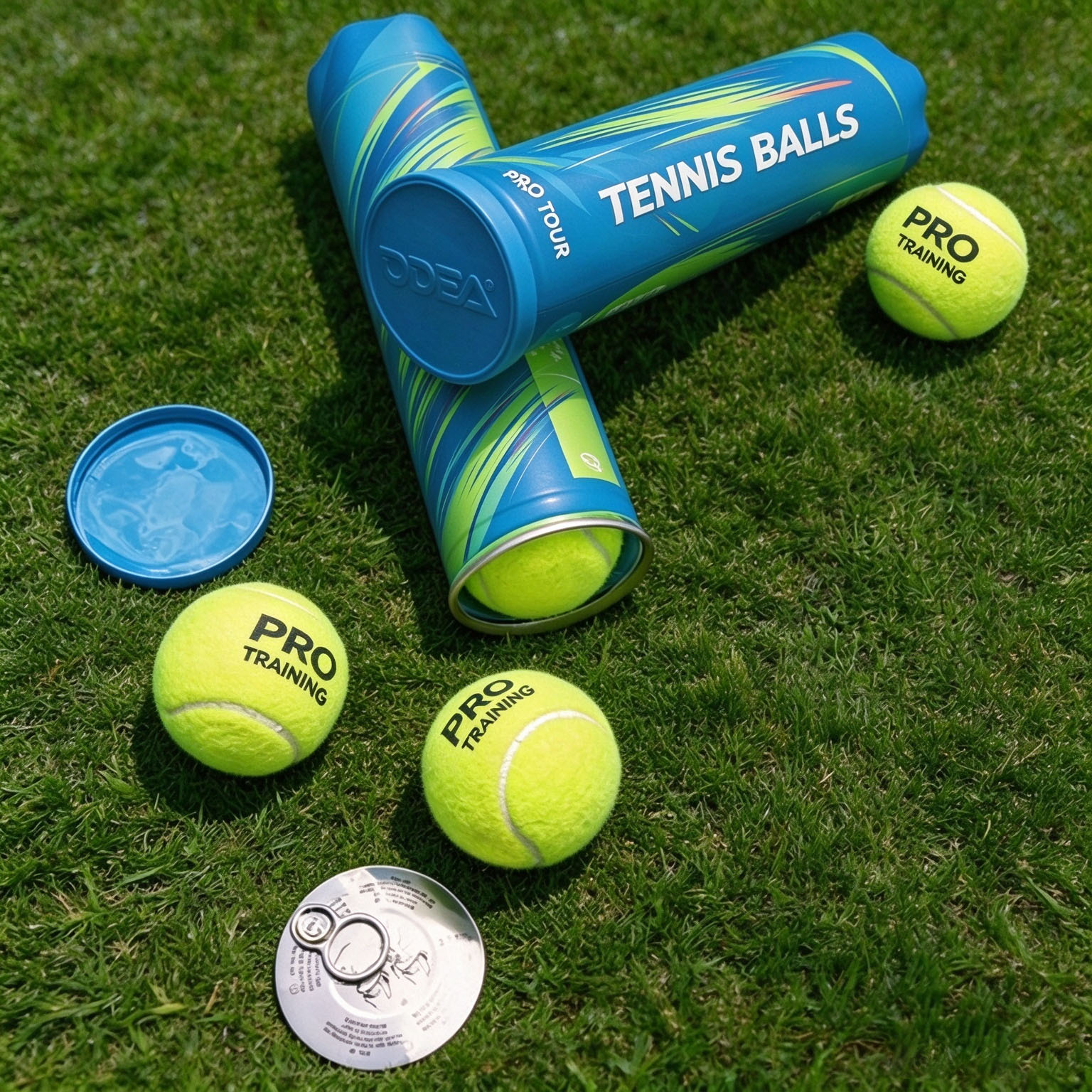
Pressurized tennis balls are sealed inside an airtight can (usually 3 or 4 balls) with internal pressure matching or exceeding atmospheric pressure. The result is a lively bounce, soft impact and the classic feel players expect in matches.
Best for: competitive matches and league play, coaches running group lessons, and players who prioritize feel over raw durability.
Watch out for: once the can is opened, pressure slowly leaks out; a can left open for a week will feel noticeably deader; felt wears faster on hard courts.
- Pressureless Balls — The Workhorse
Pressureless balls have solid rubber cores with no internal air pressure. They do not lose bounce over time, and their thicker felt shrugs off abrasive hard courts, ball machines and repetitive feeding.
Best for: ball machine and solo practice, high-volume coaching academies, and clubs buying in bulk for long sessions.
Watch out for: heavier and stiffer feel, slower and less lively bounce, and less spin and bite compared with fresh pressurized balls.
- How to Choose
Weekend league or tournament: choose pressurized balls. Daily ball-machine training: choose pressureless balls. Junior academy group lessons: choose pressureless in bulk. Coaches demonstrating touch shots: choose pressurized balls. Outdoor hard-court clubs: choose pressureless for durability.
- What to Check Before You Buy
ITF approval if the balls will be used for official competition. Can seal quality — a damaged can means lost pressure. Felt blend — a wool/nylon mix balances spin and durability. Bulk packaging — cans for retail, mesh bags for academies. Surface match — extra-duty felt for hard courts, regular-duty felt for clay.
Bottom Line
Pressurized balls give you the feel; pressureless balls give you the endurance. Most players need both — a fresh can for matches, and a bucket of pressureless balls for the daily grind. Match the ball to the job, and every practice session becomes more efficient.