Blog
Why Dogs Love Tennis Balls — and How to Pick a Safe, Durable Chew Ball
Why Dogs Love Tennis Balls — and How to Pick a Safe, Durable Chew Ball
The fuzzy texture, the springy bounce and the perfect size — tennis balls are a dog favorite for a reason. But not every tennis ball is a safe chew toy. Here is how to choose a durable, bite-resistant dog ball that lasts.
Why Dogs Are Obsessed with Tennis Balls
Pick up a tennis ball and most dogs go from calm to explosive in half a second. It is not magic — it is instinct. The fuzzy felt triggers their prey drive, the bounce feels like something trying to escape, and the size fits naturally in a medium mouth. Throw it once, and you have made a friend for life.
The Problem with Using Real Tennis Balls as Dog Toys
A standard sports tennis ball is built for a racket, not for 40 pounds of jaw pressure. The thin felt tears easily under aggressive chewing. The rubber core can crack and become a choking risk. Saliva breaks down the seam, exposing the inner shell. Dirt and sand on court balls can grind into gums. That is why purpose-made dog tennis balls exist — built around chewing, not matches.
What Makes a Good Dog Chew Ball
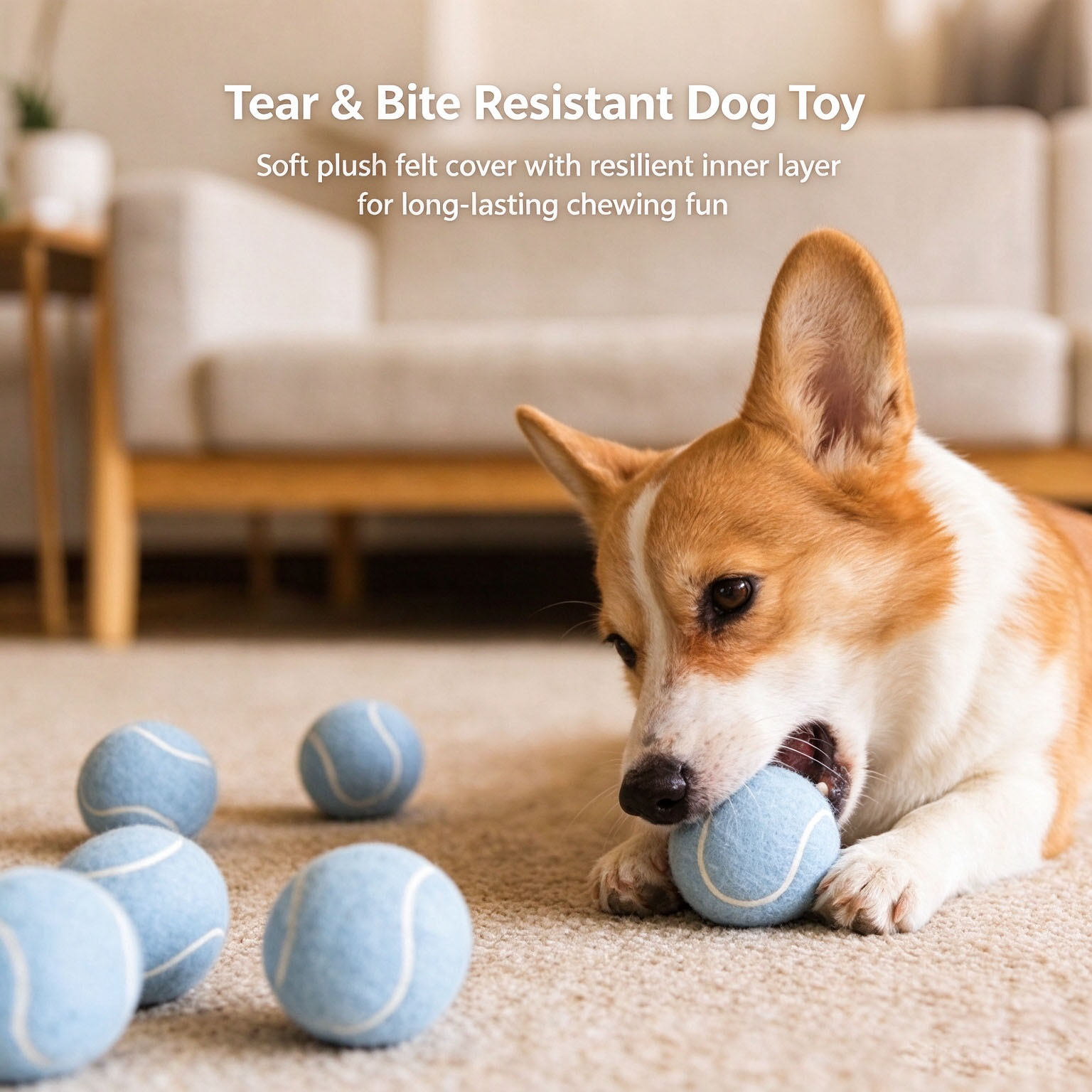
- Tear- and Bite-Resistant Felt A soft plush felt cover is friendly on teeth, while a resilient inner layer keeps the shape intact after hundreds of bites. The goal is long-lasting chewing fun without quick fuzz loss.
- Safe, Non-Toxic Materials Look for natural rubber cores and pet-grade felt. No sharp edges, no small removable pieces, and no strong chemical smell out of the package.
- Right Size for the Breed Small dogs (under 10 kg): mini / junior size. Medium dogs (10–25 kg): standard tennis-ball size. Large chewers (over 25 kg): oversized, heavy-duty model. A ball too small is a choking risk; a ball too large kills the retrieval fun.
- Built for Fetch, Floating (Optional) If your dog loves water, a buoyant model works at the lake or pool. For backyard fetch, a consistent bounce is more important than speed.
How to Use It Safely
Supervise the first few sessions to see how hard your dog chews. Replace the ball once the felt is worn thin or the seam opens. Do not leave it as an unsupervised chew toy if your dog destroys balls daily. Rinse off mud and drool after outdoor sessions to extend its life.
Bottom Line
A dog tennis ball is one of the simplest, cheapest joys you can give your pet. But a cheap sports ball is a choking hazard waiting to happen. Choose a bite-resistant, pet-specific ball — and the game of fetch can safely go on, year after year.